


»Lost Cabaret« – Die neue Show von Daniel Malheur
"Lost Cabaret" – Daniel Malheur’s new show

Am kommenden Montag, dem 3. September, ist es mal wieder soweit: Das Lost Cabaret, das wirklich grandiose Projekt von Salontenor und MonokelPopper Daniel Malheur, geht in die fünfte und (hoffentlich nur) für 2012 vorletzte Runde. »Lost Cabaret? Was’n das? Davon hat der Knickel doch noch nie berichtet!?«
Ja, Schande über mein Haupt. Diese verpasste Gelegenheit möchte ich nun nachholen, denn: Es ist egal, ob Du die ersten Episoden verpasst hast! Ein Quereinstieg ist absolut problemlos möglich und soll hiermit unbedingt empfohlen werden!
Das Konzept des »Lost Cabaret« ist ein wenig schwer zu beschreiben: Theater? 20er-Jahre-Musik-Show? Ein hier und da interaktiver Partyabend für den Zuschauer; wie die Rocky Horror Picture Show – und doch komplett anders? Ist das, was auf und neben der Bühne passiert alles geplant oder herrscht hier das pure Chaos? Gibt es ein ausgeklügeltes Drehbuch oder ist das mehr Improvisation?
Alle diese Fragen kann man irgendwie mit: »Ja!«, beantworten. Aber irgendwie auch nicht … Mir persönlich ist solch eine Show noch nie untergekommen und ich muss gestehen: Ich liebe es!
In der August-Episode des lediglich einmal im Monat stattfindenden Spektakels durfte ich sogar in meiner Schauspielpremiere als »Wunderwaffe aus Babelsberg« mitwirken. Herr Harlan war mein Name und mein Auftritt politisch höchst unkorrekt. Die oben stehenden Fragen konnte ich mir allerdings selbst als Ensemblemitglied nicht eindeutig beantworten. Mehr zu meinem kleinen Beitrag zum »Lost Cabaret« gibt’s unter der Inhaltsangabe: ein Filmchen!
Also besucht am kommenden Montag das 3 Schwestern (im Bethanien, Mariannenplatz, Kreuzberg), welches Euch einmal mehr mit auf eine Zeitreise in die 20er nehmen wird und überzeugt Euch selbst.
… Und bitte »dress to impress«, bevor Euch Kassenfräulein Erika nicht reinlässt … ohne euch zu sagen, wie schlimm ihr ausseht. 😉
»Lost Cabaret«
Die Geschichte eines Tango-Etablissements
Berlin 1928: Der New Yorker Stummfilmstar Daisy Young und ihr Gatte, der Schriftsteller Ernst Eduard – genannt der Baron – eröffnen in der Berliner Friedrichstadt ein Vergnügungsetablissement der besonderen Art: »Cabaret, Tangotanz & Barbetrieb« verheißen mondäne Unterhaltung und berauschendes Amüsement im »Lost Cabaret«. Die Berliner Illustrierte schreibt vom »kometenhaften Aufstieg«, verrückte Künstler reisen aus der gesamten Republik an, nur um auf dieser Bühnen zu stehen und das Publikum goutiert die Shows mit ausverkauften Abenden.
»Lost Cabaret« – Ein Etablissement, eine Show und Ihre Protagonisten … nach einer wahren Begebenheit!
Was bisher geschah:
(Ent-)Warnung: Die Story klingt hier sehr komplex. Allerdings wird zu Beginn jeder Show die Geschichte sehr verständlich und in sehr kurzer Zeit erläutert. Und kompliziert ist die Chose tatsächlich überhaupt nicht … zumindest nicht für den Zuschauer. 😉


Das neu gegründete Tango-Etablissement öffnete am 7. Mai seine Tore und zündete ein Feuerwerk an Unterhaltung. Ernst Eduard – genannt der Baron, seine Gattin Miss Daisy, das Tanzpaar Anita & Seb wie auch die geladenen Gäste bewegten sich auf jedem Parkett – vom anspruchsvollen Chanson bis zur gekonnt schlüpfrigen Tanzeinlage, von Komödie bis Tragödie – mit höchster Grandezze. Und sogar der mit Spannung erwartete mysteriöse Impressario des Etablissements – der sogenannte Professor – ließ am Ende wenigstens mittels elektroakkustischer Übertragung seine Stimme ertönen. Alles schien perfekt, doch dann traf den Baron ein Schicksalsschlag nach dem anderen. Zunächst verschwand seine Gattin Daisy Young spurlos. Ernst Eduard: »Das ist nicht das erste mal, die kommt schon wieder.«
Dann brannte der Pianist Jean-Claude mit einem chinesischen Seemann durch, Anita – die »Königin der Nacht« – wachte nach der Eröffnungssoirée aus dem Delirium nicht mehr auf und wurde ins Sanatorium St. Absinthus zur Entwöhnung verbracht und ihr Tanzpartner Seb wechselt zur Konkurrenz ins Eldorado. So standen Ernst Eduard nebst schwäbischen Garderobier plötzlich recht verloren auf der Bühne des Etablissements. Anita schickte ihnen Mademoiselle Flavia aus Holland mit einem Empfehlungsschreiben per »Flaschenpost« aus dem Sanatorium. Die BZ am Mittag vom 12. Juni 1928 schreibt: »… eine Pianistin und Akkordeonistin, die mit Witz, Charme und einer großartigen Gesangsdarbietung Ernst Eduard, den Gardeobier und vor allem das Publikum im Nu für sich einnehmen konnte.«
Ungebeten gesellte sich der trinkfreudige, wenn auch nicht 100 % trinkfeste Hauptkommissar Plewka nebst Kriminalassistentin Carla von der Mordkommission »M« am Alexanderplatz zu Ihnen. Laut Hauptkommissar Plewka ist er – Ernst Eduard – der Hauptverdächtige im Fall des verschwundenen Stummfilmstars Daisy Young – Ernst Eduards Gattin. Selbst einen Mord traut ihm der Hauptkommissar zu.
Während der Baron – unter Hausarrest stehend – sich also um die Belange des Etablissements kümmert, taucht der Garderobier Alexander H. in Berlins Welt des Übersinnlichen ab, um auf eigene Faust Miss Daisy zu finden. Mit Hilfe der Wahrsägerin Lady Iris wird zwar ein vager Kontakt zu der Diva hergestellt und eine seltsame Botschaft offenbart: »Findet die anonymen Eier!«
Dies dürfte allerdings kaum als Beweis einer einer polizeilichen Prüfung standhalten. Da taucht aus dem Nichts die attraktive Schauspielerin Bruni de Beauvoir auf. Sie behauptet, als einzige wirklich beweisen zu können, dass Daisy lebt.
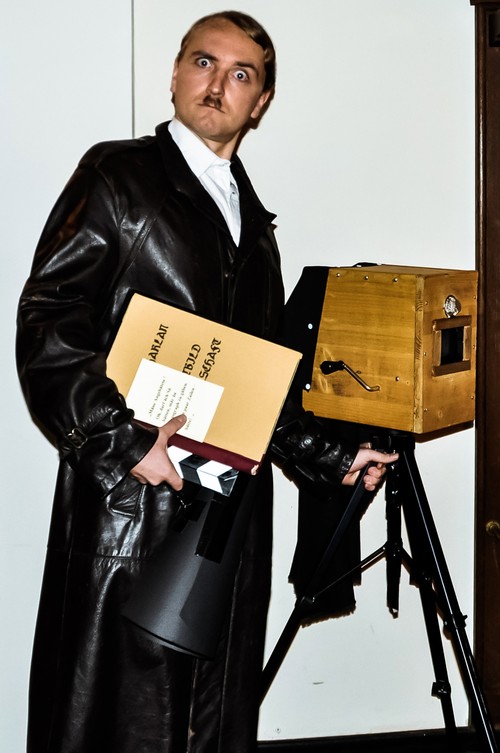
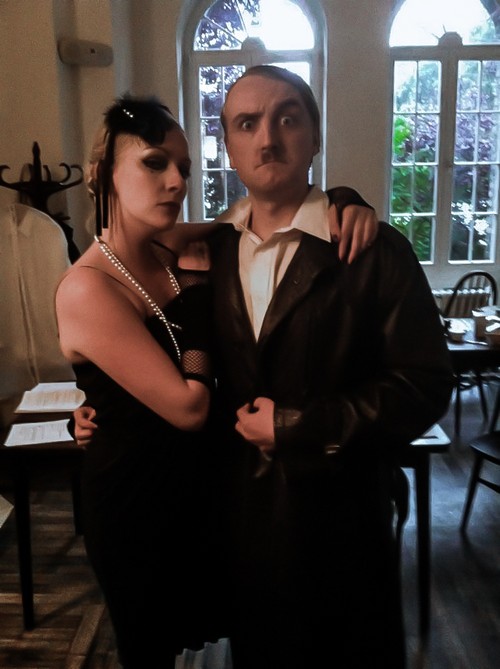
Mit Hilfe ihrer »Wunderwaffe aus Babelsberg«, Herrn Harlan – einem schauspielenden Kameramann mit befremdenden Auftreten, harrrrrscher Aussprache und Charlie-Chaplin-Schnauzbart – wird im »Lost Cabaret« ein gefälschter Bericht für die Deulig Wochenschau gedreht, den die Diva Daisy (gespielt von Bruni de Beauvoir) angeblich mit den Produzenten Charlie Fox und Peter Century im Gespräch über ihren neuen Film bei den Dreharbeiten in Los Angeles zeigt …
In diese Inszenierung platzt plötzlich Tänzerin Anita – mal wieder sturzbetrunken – herein. Nach einem kurzen Handgemenge um ihren Koffer mit dem schwäbischen Garderobier Alexander H. überreicht die »Königin der Nacht« dem Baron den Groschenroman eines anonymen Autoren: »Der teuflische Plan des Professor Fabergé«.
Anonymer Autor? Fabergé?: »Findet die anonymen Eier!«
Wird dieses Geheimnis, das aus dem Sägeblatt der Wahrsägerin Lady Iris sprach, nun wahrhaftig gelüftet? Wer sind die »falschen Freunde« vor denen Lady Iris den Baron so inständig warnt? Wird die »Wunderwaffe aus Babelsberg« zünden und übernimmt Schallplattenunterhalter Stephan Wuthe, der zuvor von Herrn Harlans Limousine von seinem motorisierten Zweirad direkt ins Krankenhaus befördert wurde nun auch noch die Aufgabe des einbeinigen Stepptänzers? Sehen Sie selbst!
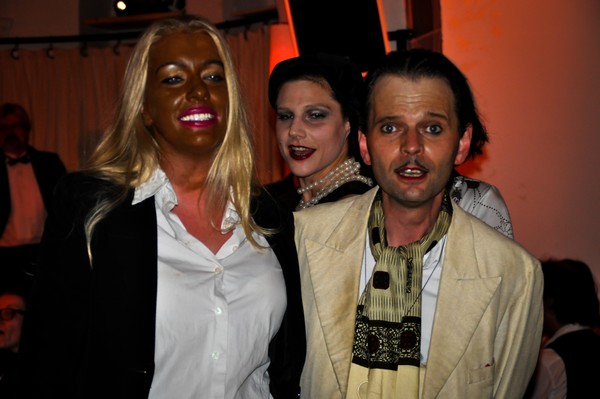
Wie gesagt hatte ich das Vergnügen den Herrn Harlan zu spielen, was die hier gezeigten Fotos eindrucksvoll belegen. Da mein Dasein als Filmemacher mir überhaupt erst die Rolle einbrockte, musste ich in meiner Rolle natürlich auch die Kamera schwingen, was nicht allzu einfach war, da Monsieur Malheur et moi meiner Canon XM2 einen vollkommen authentischen, aber auch selbstgezimmerten (!) Holzbody gebastelt hatten.
Das meisterliche Ergebnis und zugleich der größte Betrugsfall der Kriminalgeschichte der 1920er Jahre sieht so aus:
Wir sehen uns am 3. September 1928 um 21 Uhr im »Lost Cabaret« im »3 Schwestern« im Bethanien am Mariannenplatz in X-berg in Berlin bei Polen.
Äch größe sä,
Herr Harlan
Lade Dir Infomaterial über Daniel Malheur herunter* und buche ihn!
* Rechtsklick: "Ziel speichern unter" oder per Linksklick im Browser öffnen.[/left50]

Nach wie vor im Tupamaros Shop erhältlich:
Daniel Malheur - Best of MonokelPop!
Next Monday, September 3rd, will be time for Lost Cabaret again! "Lost Cabaret" is the new project by 1920s MonokelPop and tango tenor Daniel Malheur that’s going in its fifth and (hopefully just) for 2012 second last round. "Lost Cabaret? What the hell is that?"
Yes, shame on me. I want to make up for this missed opportunity as it doesn’t care if you have seen the first four shows or not. Visiting the "Lost Cabaret" in its fifth round for the first time is absolutely no problem and shall herewith be highly recommended! The show is even mainly presented in two languages: English and German!
It’s a bit hard to describe the concept of the "Lost Cabaret": Theater? 20s music show? A partly interactive party night for the audience (un)like the Rocky Horror Picture Show? Is the whole show you get to see presented as planned or is pure chaos reigning? Is there a detailed and sophisticated screenplay or is it more improvisation?
You can answer all these question with: "Yes!" … Somehow. Or not? Well, I’ve never before seen a show like that and I have to confess: I love it!
It was the episode presented in August when I had the honor to join the ensemble of the monthly only on one Monday evening opening "Lost Cabaret". My name was Herr Harlan, die "Wunderwaffe aus Babelsberg". In English: Mr. Harlan, the "silver bullet of Babelsberg". Babelsberg is by the way Germany’s little Hollywood. Herr Harlan was a politically very uncorrect character with strrrange and harrrsh Nazi-like prrrronunciation and look – well, it surely was more like a Charlie Chaplin moustache. 😉 Anyway, even as a one-time member of the ensemble, I didn’t manage to clearly answer above written questions.
So please visit the 3 Schwestern (Bethanien, Mariannenplatz, Kreuzberg, Berlin) on upcoming Monday where you will be taken on a journey through time: Back to the 20s!
… and please dress to impress! Otherwise Fräulein Erika over the counter might not let you in – without telling you how horrible you
"Lost Cabaret"
The Story of a Tango Night Club
Berlin 1928: The New York silent movie star Daisy Young and her husband, the novelist Ernst Eduard – also known as "The Baron" – are opening an exceptional night club in Friedrichstadt, Berlin. "Cabaret, tango dance & bar" promises sophisticated entertainment and heady amusement in the "Lost Cabaret". The weekly journal "Berliner Illustrierte" writes about the "Meteoric rise of the "Lost Cabaret", eccentric artists travel from the whole country just to be on their stage and the audience appreciates it with sold out nights.
"Lost Cabaret" – a night club, a show and their protagonists – based on a true story!
The story so far:
Relax: The story might sound pretty complex reading it, but it’s not hard to understand. Furthermore, it’s quickly and comprehensible explained at the beginning of every show.
The newly established tango night club opened on 7 May its doors and set fire to a firework entertainment. Ernest Edward - known as the Baron, his wife, Miss Daisy, the dancing couple Anita & Seb as well as the guests moved on any stage – from the sophisticated to the song skillfully slippery dance number, from comedy to tragedy – with the highest grandezze. And even the much-anticipated mysterious impresario of the establishment – the so-called professor – was sounded at least through the end, electroacoustically transmitting his voice. Everything seemed perfect, but suddenly the Baron had to go through several blows of fate. First, his wife Daisy Young disappeared without a trace: "This is not the first time, she will come back." (Ernest Edward). Then the pianist Jean Claude eloped with a Chinese sailor. Finally Anita, the "Queen of the Night" didn’t wake up anymore after the opening soiree and was brought into the sanatorium St. Absinthus. And at last, dance partner Seb left the "Lost Cabaret" to hire at the "El Dorado" – another night club. Finally, Ernst Edward was – together with his Swabian dresser – pretty lost on the stage of the business. From St. Absinthus, Anita sent them Mademoiselle Flavia from Holland and a letter of recommendation … as a message in a bottle, of course. "… A pianist and accordionist who has wit, charm and a great vocal performance, who took Ernst Eduard, the Garderobier and especially the audience for herself." That’s what the newspaper "Berliner Zeitung am Mittag" wrote on June 12th 1928 about Flavia’s first performance at the cabaret.
Ernest Edward was stoked, but then – unbidden – chief inspector Plewka arrived. Plewka, the boozing but actually not really hard drinking cop of the commissariat "M" at Alexanderplatz told the Baron that he is the prime suspect in the case of the missing silent film star Daisy Young – the Baron’s wife. The chief inspector even supposed that the Baron might be the murderer of Daisy!
While the Baron – now under house arrest – was caring for the needs of the establishment, dresser Alexander H. dived into Berlin’s world of the supernatural to find Miss Daisy. With the help of "Wahrsägerin" Lady Iris (Wahrsägerin = fortune teller … with a singing saw) a very strange message was received – "Find the anonymous eggs!" – and vague contact with the diva was made. Well, but this supernatural "proof" might hardly stand up as an evidence in a police investigation. Appearing from nowhere, the attractive actress Bruni de Beauvoir claims to be able to prove that Daisy is alive. With the help of her "silver bullet of Babelsberg" Mr. Harlan – an acting cinematographer with odd manners, a harrrrsh pronunciation and a moustache like Charlie Chaplin – a fake story for the Deulig Wochenschau (Deulig Newsreel) is shot: Miss Daisy Young (played by Bruni de Beauvoir) is seen, supposedly in conversation with the producers Charlie Fox and Peter Century about her new movie in Los Angeles. In this mise-en-scène, the drunken dancer Anita lurches in. After a short scuffle with the dresser Alexander H., Anita commits a dime novel to the Baron: "The diabolical plan of Professor Fabergé" written by an anonymous author … Fabergé? Anonymous? "Find the anonymous eggs!"
Will this secret, arisen by the saw of Lady Iris, now be revealed? Who are the "wrong friends" Lady Iris warns strongly against? Will the "silver bullet of Babelsberg" fire and will record entertainer Stephan Wuthe adopt the part of the one-legged step dancer after Herr Harlan’s limousine sent him to hospital when it kicked him off his motorbike? Find it out!
This little movie is the result of my work as the "Silver Bullet from Babelsberg". I’m sorry that it’s unfortunately just in German, but it might be funny anyway. The voice is mine and the camera used (Canon XM2) was tinkered in a self-made wooden body to make it look authentically.
See you September 3rd at the "Lost Cabaret" at "3 Schwestern" in Bethanien at Mariannenplatz in X-berg in Berlin near Poland.
Best regarrrds,
Herr Harlan
Download some information about Daniel Malheur* and book him!
* Right click and "Save as..." or open it in your browser. It’s in German.
Nach wie vor im Tupamaros Shop erhältlich:
Daniel Malheur - Best of MonokelPop!
Hier gibt’s noch mehr Fotos (© Monsieur van Marle).
Here are more photos (© Monsieur van Marle).